What Happens at a Charity Bike Build? The Day, Start to Finish
At a charity bike build, teams of about ten earn bike parts by completing challenges, then build a complete bike from them. Qualified mechanics safety check every bike, and a charity collects them the same day, usually in front of the team. It takes about two and a half hours and runs in a room you already have.
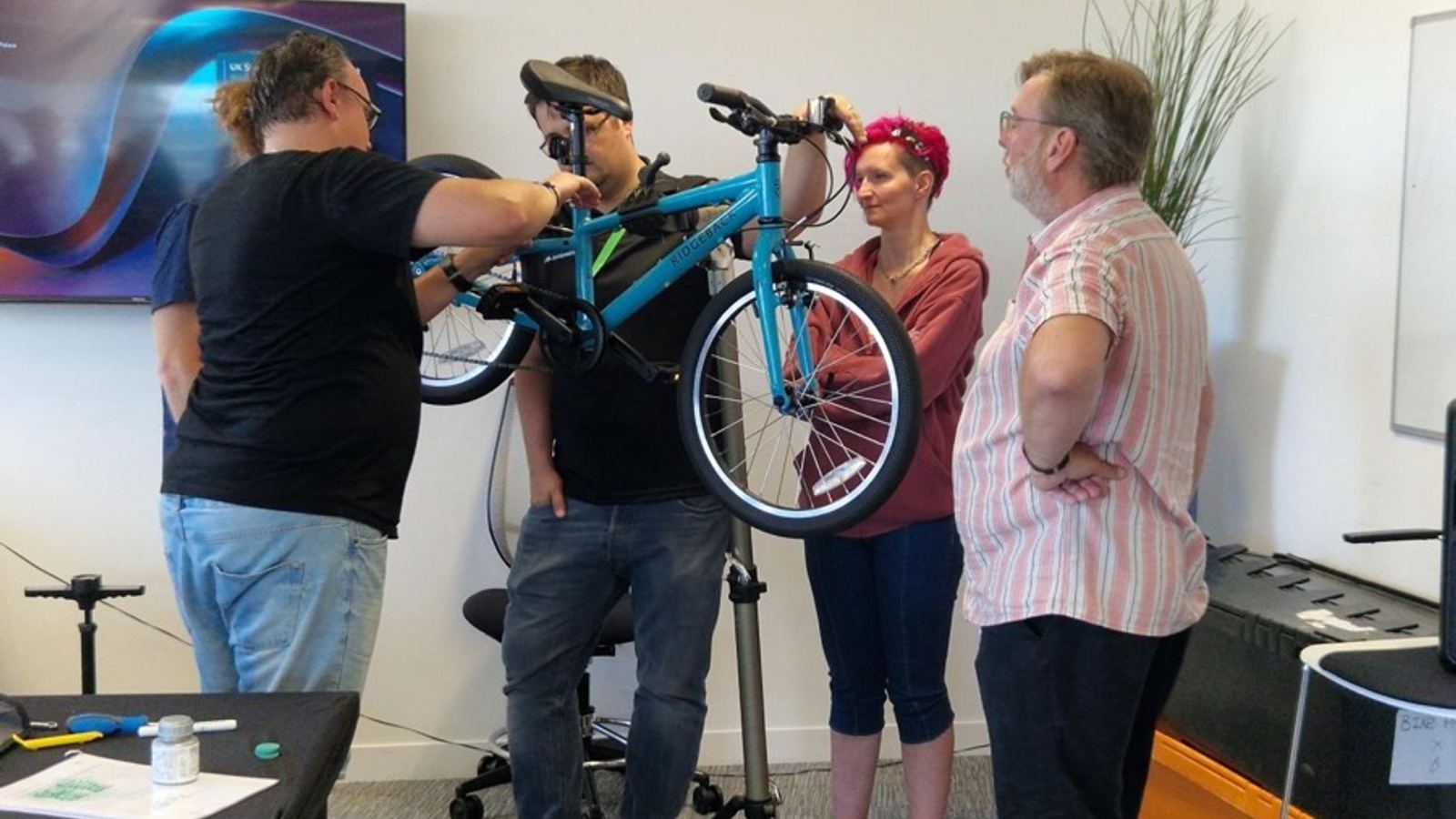
People who have not been to a charity bike build picture a pile of parts, an instruction sheet, and an afternoon of quiet assembly. It is not that, and the difference is the whole point of the day.
We ran our first one in 2011, 34 bikes for a charity in East London, and more than 3,000 bikes have gone out the same way since. It is still the event most teams book, and the one people most often ask us to describe before they commit.
So here is the day in order: what happens before your team arrives, how the teams are set up, how the parts are earned, how the bikes are built and checked, who gets them, and what you receive afterwards. If you want group sizes and prices first, the Charity Bike Build page has them.
What happens before your team arrives
Our crew gets to the venue first. The frames, the parts, the tools and the challenge kit come in, and every team's station is set up before anyone from your side walks through the door. If the event needs floor covering, that comes with us.
The room is one you already have. A meeting room, a hotel function room and a conference hall all work, and we deal with the venue directly on access, timings and floor protection, so you are not passing messages between us and them.
Your part of the preparation was three things: a room, a date and a rough headcount. Everything after that was ours.
How the teams are organised
People are split into teams of about ten. We mix departments and levels where we can. Ten people from the same desk will build a bike, but they will not learn much they did not know.
Nobody stands at the side, and that is designed in rather than hoped for. Every part of the build needs hands, and the challenges that earn the parts need people who are not building at that moment. A team that divides the work in the first two minutes finishes comfortably. A team that does not spends the first twenty minutes finding out why.
There is no fitness element and nothing that puts an individual on the spot, which is why it works for a floor of partners and juniors as well as for a sales team.
How the parts are earned through the challenges
This is the part nobody expects. Teams do not start with a complete bike kit. They earn it.
A series of challenges runs alongside the build, some physical and some mental, and each one earns a part. A wheel. A set of pedals. The brakes. Teams have to keep deciding who builds and who goes for the next part, and that decision, made again and again against a clock, is where most of the team building actually happens.
It also keeps a big room moving. With 200 people, the challenges are what stop the afternoon drifting.
How the bike gets built
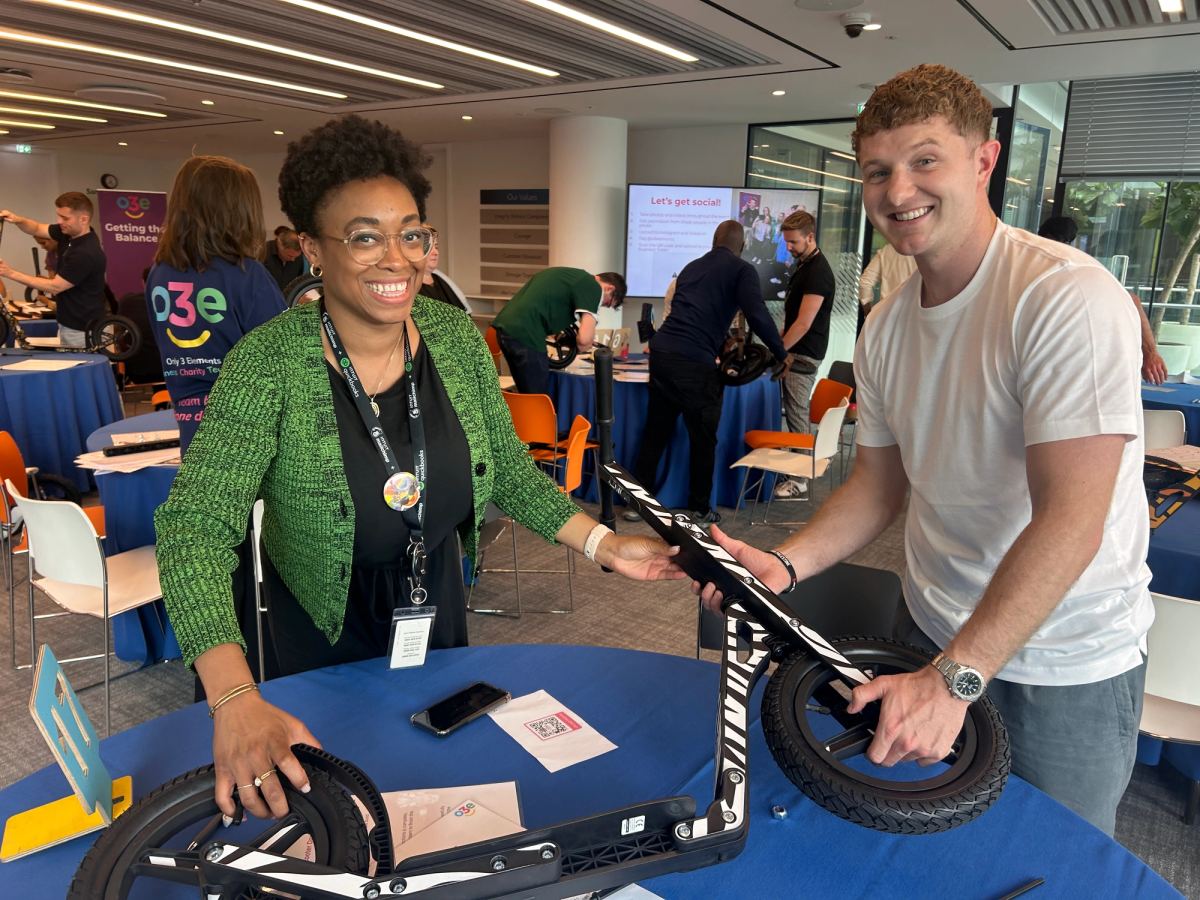
With parts coming in, the bike goes together. Frame, wheels, brakes, gears, saddle, pedals. Our crew works the room throughout, so a team that gets stuck gets unstuck quickly, and nobody needs to have built a bike before.
It takes about two to two and a half hours from the first challenge to the last bolt. Competitive teams race the clock. Quieter teams settle into the build and finish at their own pace. Both end up with a bike, and both tend to be surprised that they did.
How every bike is safety checked before it leaves
Every bike is checked by our qualified mechanics before it goes anywhere. Brakes, wheels, gears, headset, the lot.
This is not a formality. The bikes are going to real people, some of them children, so the check is done properly and a bike that does not pass is fixed until it does. Teams take the check seriously once they know who is getting the bike, and the moment a mechanic signs one off is often when a team realises the afternoon was not a game.
Who gets the bikes, and when
Wherever we can, the charity collects in front of your team, on the day. The bikes go with helmets, locks, lights and pumps.
The people who get them are leaving a hostel, or are a young carer, or are a family with no car. A bike is transport, and transport is a job interview, a school run, a way to a friend's house. The bikes are delivered to the charity the same day, normally straight after the event.
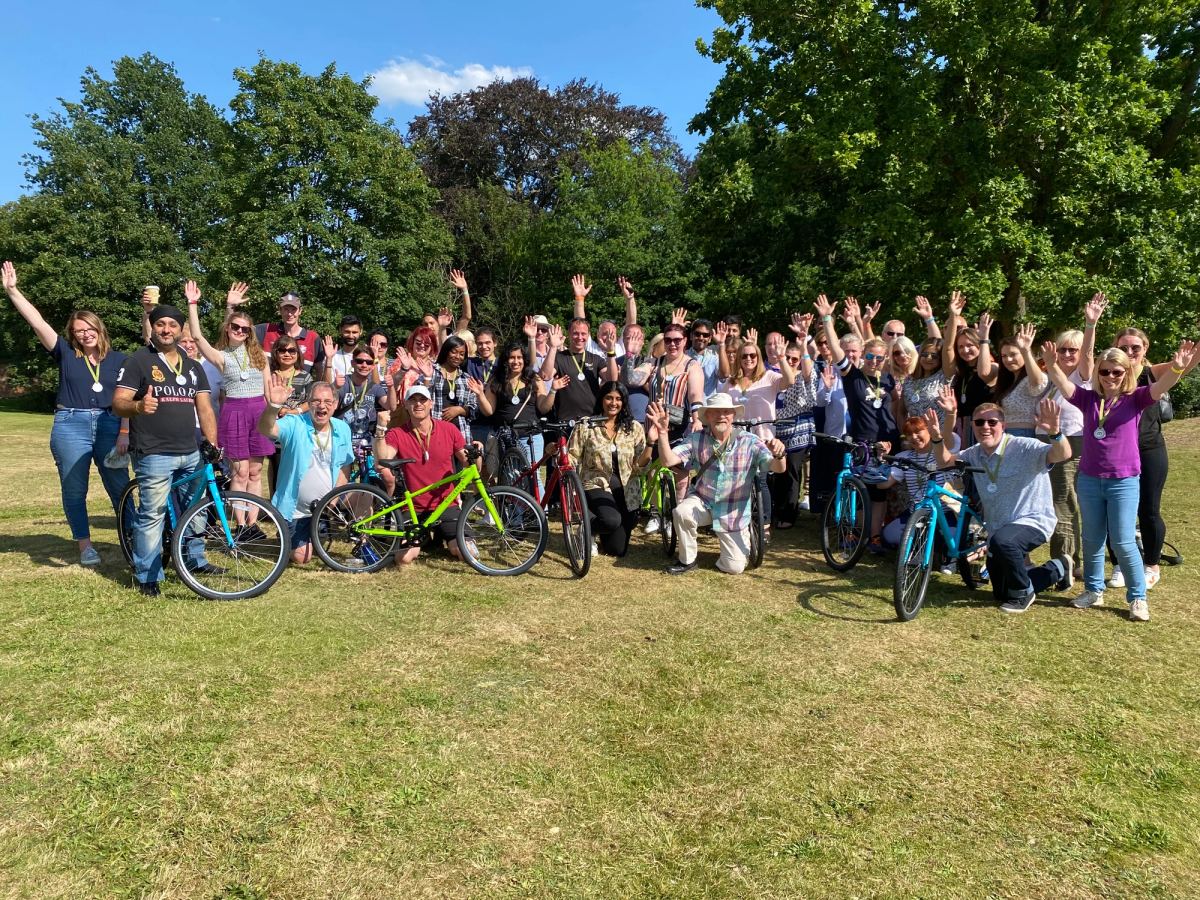
That moment, the row of finished bikes at the front of the room and the charity taking them away, is the part people talk about afterwards. It is also the photograph that ends up on the intranet and in the annual report.
What you get after the event
We send you the story: photographs, the donation figures, and copy your team can post. The numbers are already counted and the charity is already named, so nobody on your side has to chase anything.
If the day is going into an ESG or CSR report, our guide to CSR team building covers what to record. Five bikes, a named charity and a date is a sentence with a number in it.
Who a charity bike build suits
The Bike Build runs for 8 to 2,000 people, indoors or out. It is the safe choice for a mixed group, the loud choice for a competitive one, and the big choice for a conference, because 200 people building 25 bikes at once is a sight.
If your team is smaller than eight, or you want something calmer, OnBoard is the usual alternative. If you have fifty minutes rather than an afternoon, Scooter Dash is the same idea in a shorter form.
How much a charity bike build costs
The price is a total for the group, set by size band, and it is the same anywhere in the UK on any date. As a guide, it is £3,388 excluding VAT for up to 16 people, two bikes donated, £4,703 for up to 40 people, five bikes, and £17,819 for up to 200 people, twenty five bikes.
The price includes the crew, the kit, the mechanics and the bikes themselves. Every band is listed in our prices guide.
How to book a charity bike build
1. Count the room. An approximate headcount and a month is enough to start. A group that sits just over a band builds an extra bike, so mention it if you are close. 2. Get the price. Use the price tool and you will have the figure in about a minute. 3. Name the room. Tell us the size and we will confirm the fit, or suggest an event that works better in it. 4. Turn up. We bring everything else, and we are set up before your team walks in.
The bottom line
A charity bike build is two and a half hours in which every person has a job, the room stays moving because the parts have to be earned, and the day ends with real bikes going to real people. The safety check is proper, the handover happens in front of your team, and the write up has a number in it.
Since 2011 that has added up to more than 3,000 bikes. Yours would be the next row at the front of the room.
Questions we get asked
How long does a charity bike build take?
About two to two and a half hours, from the first challenge to the handover. Our crew sets up before your team arrives.
Do we need any bike knowledge?
No. Our crew works the room and our mechanics check every bike. Nobody on your team needs to have built a bike before.
Who gets the bikes?
People leaving a hostel, young carers and families with no car. The bikes go to the charity the same day, with helmets, locks, lights and pumps.
How many bikes does a group build?
It depends on the group size. Up to 16 people build two bikes. Up to 40 people build five. Up to 200 people build twenty five.
Can it run indoors?
Yes. It runs indoors or out, in a room you already have. We deal with the venue on access and floor protection.
Is a charity bike build competitive?
It can be. The challenges that earn the parts run against the clock, so competitive teams race. Quieter teams settle into the build and finish at their own pace. Both end up with a bike.
Events mentioned in this piece
VINCI
Took our logistical pain away.
All attendees who gave us feedback have thoroughly enjoyed the activities and having been involved in other previous team building activities in the past they were really pleased that the activity had a meaningful purpose. From an organiser’s point of view, the team were very accommodating and took our logistical pain away by liaising directly with the venue so that we could concentrate on the rest of the event.
Bruno, Charity Bike Build
VINCI
Took our logistical pain away.
All attendees who gave us feedback have thoroughly enjoyed the activities and having been involved in other previous team building activities in the past they were really pleased that the activity had a meaningful purpose. From an organiser’s point of view, the team were very accommodating and took our logistical pain away by liaising directly with the venue so that we could concentrate on the rest of the event.
Bruno, Charity Bike Build
Kyriba
By far the best team building activity I have ever seen.
Having surveyed the team, this was one of the highest ranked sections of our 2.5 day conference. The session from o3e was exceptional, great team building activity and an amazing cause. Very proud of Kyriba, the leaders and organisers for having brought o3e to this event.
Gill, Performance Wheelchair Challenge